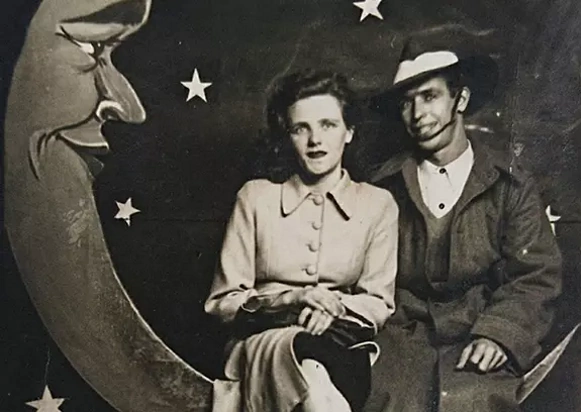
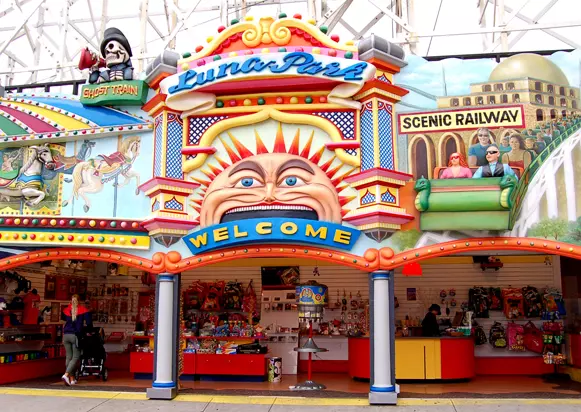
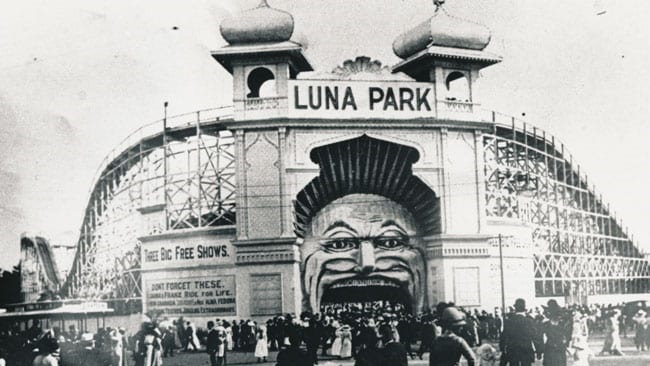
On December 13th 1912, Mr Moon opened his giant mouth to St Kilda and thousands of people flocked into Melbourne’s Luna Park for the first time.
Since that day, St Kilda’s famous Luna Park, the oldest theme park in Australia, has had millions of visitors who have enjoyed some of the most iconic rides in Melbourne. Year after year our guests bring their families back to share memories and a day of fun at the most memorable amusement park in Melbourne.
With over 100 years of memories at our iconic St Kilda location, Luna Park is undoubtedly the most well known and loved of the theme parks Victoria has to offer. More than just some of the most exciting rides in Melbourne, Luna Park has seen many changes over a 100-year history, with highs, lows and of course many new rides installed throughout the decades.
A history of escaping to St Kilda
Long before Europeans appreciated the beauty and bounty that Euroe Yroke (St Kilda) had to offer, the Yalukit-Willam people of the Kulin Nation lived in the area for many thousands of years. While much of the evidence of these Indigenous lives has now been lost to time, an ancient Corroboree Red Gum tree where gatherings were held can still be seen in the midst of busy St Kilda Junction.
The first recorded mention of St Kilda by European settlers was by Charles Grimes, a colonial-surveyor, as he sailed into Melbourne from Sydney in 1802. However, it wasn’t until late in the 1830s that grazers began to settle in what was then known as Green Knoll. The area became known as ‘St Kilda’ when Charles La Trobe suggested renaming Green Knoll after a yacht anchored off the foreshore whilst visiting the area in 1842.
By the 1850s Melburnians could take advantage of regular transport to and from the rapidly developing settlement in St Kilda. With some of Melbourne’s wealthier families choosing to build stately homes in St Kilda during the 1860s, it quickly became Melbourne’s seaside holiday destination of choice with as many as 15 hotels dotted along the St Kilda foreshore.
For the next 30 years the development of the St Kilda area ebbed and flowed as the Victorian economy matured post the Gold Rush. While some of St Kilda’s wealthier families lost their fortunes what did not change was its popularity as a seaside holiday destination for Melbourne’s masses.
By the dawn of the 20th Century it was clear that St Kilda had cemented its place as the premier beachside location in Melbourne seeing the opening of Melbourne’s now iconic amusement park, Luna Park, in 1912. Revisit our past milestones below.
WATCH: Take a step back in time and view over 100 years of history, rides and laughs within Luna Park Melbourne, including incredible footage of the Park opening in St Kilda back in 1912.
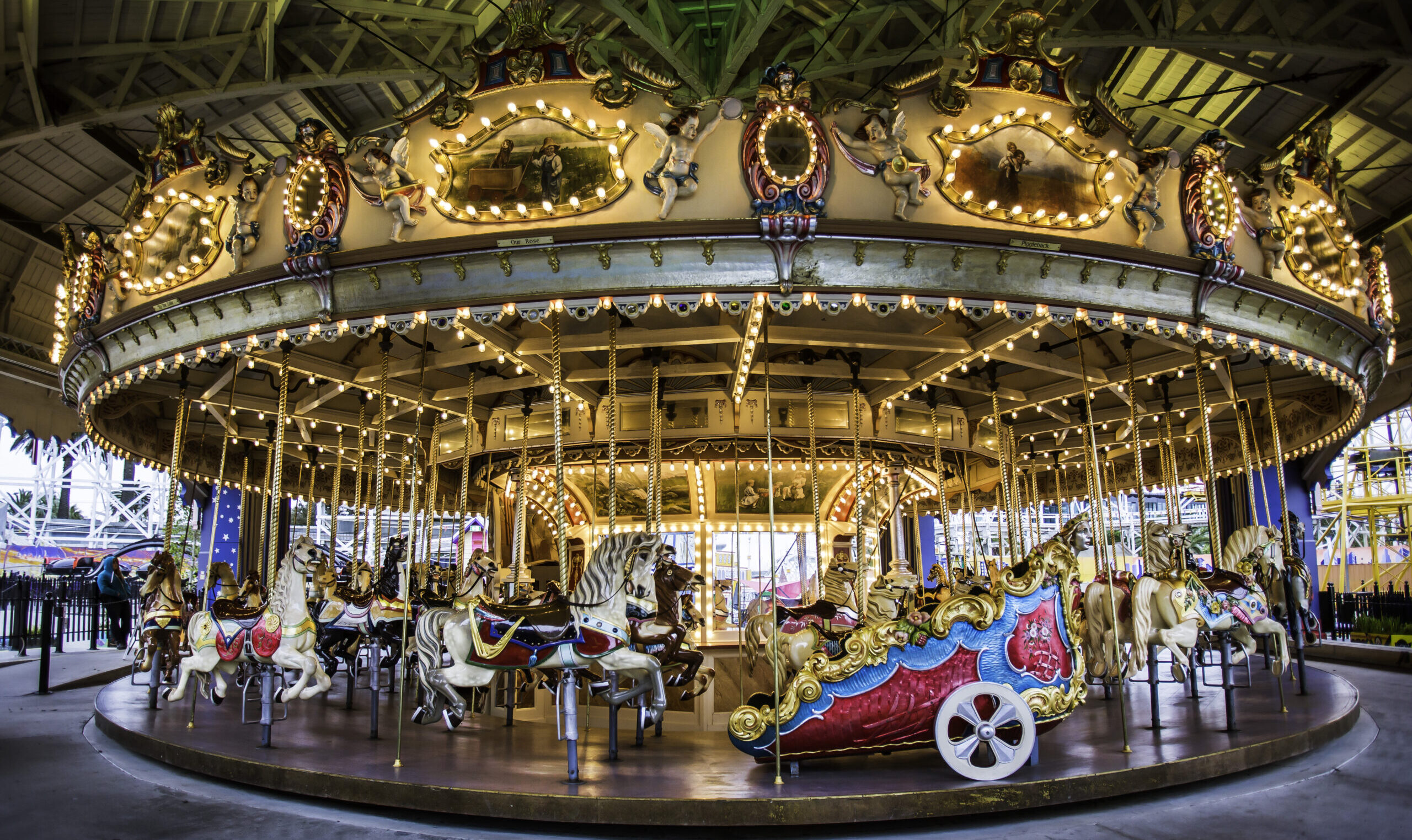
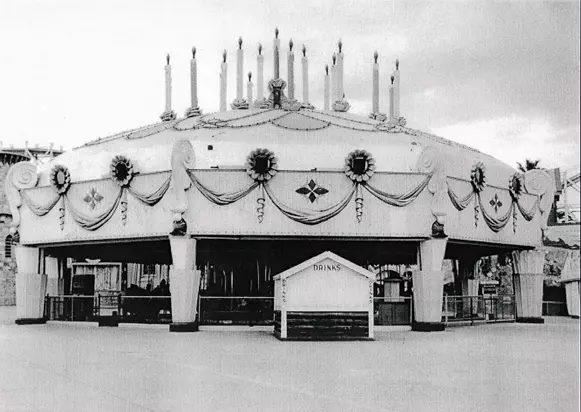
Celebrating over 100 years of Carouselling!
Luna Park’s Carousel is the largest and most elaborate in the Southern Hemisphere.
At its time of manufacture, the amusement business was flourishing with hundreds of carousels operating
throughout Europe, England and America .
The Philadelphia Toboggan Company (PTC) was renowned for Its large, decorative carousels and was one of the most important American manufacturers. The Luna Park Carousel was number 30 of a total of 80 carousels made by the company between 1903 and 1931. One of the company’s finest four-row machines, PTC#30 is one of only 25 PTC carousels still in operation and was the only one exported.

A History of Fun!
Scroll through our timeline to explore our glorious past

1912
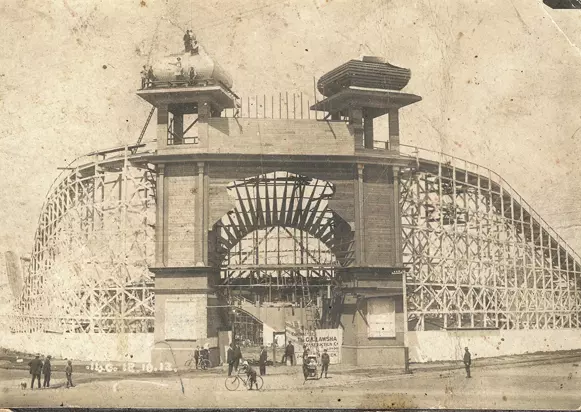
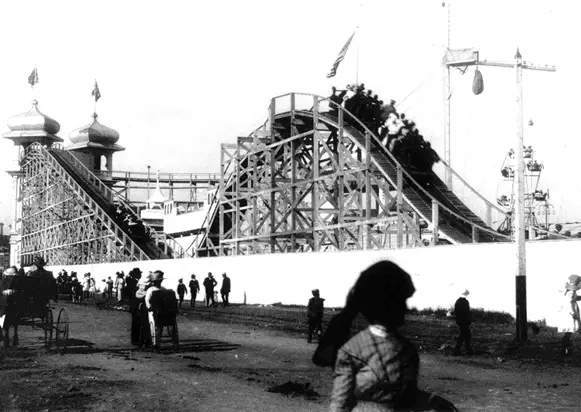
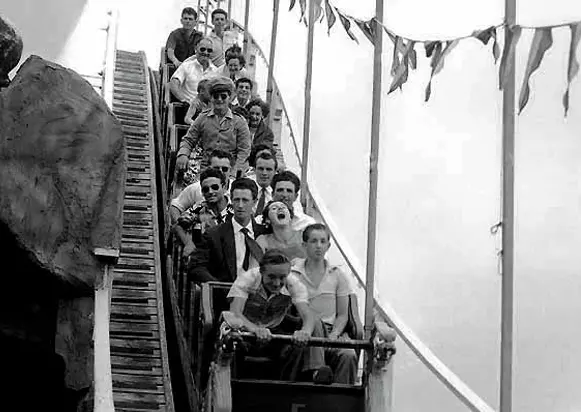
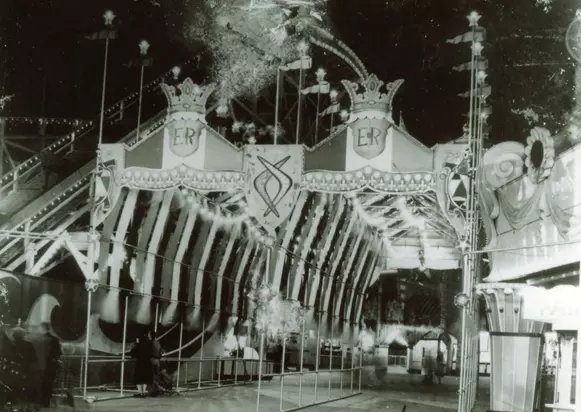
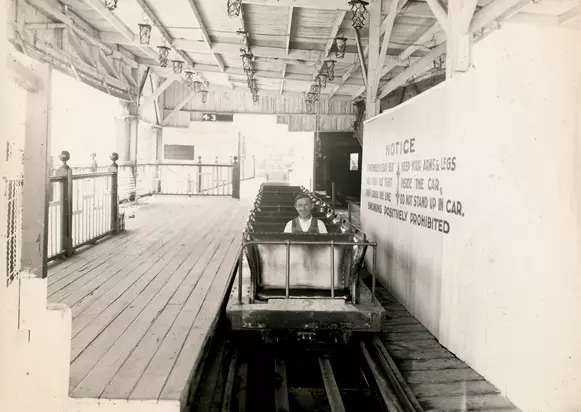
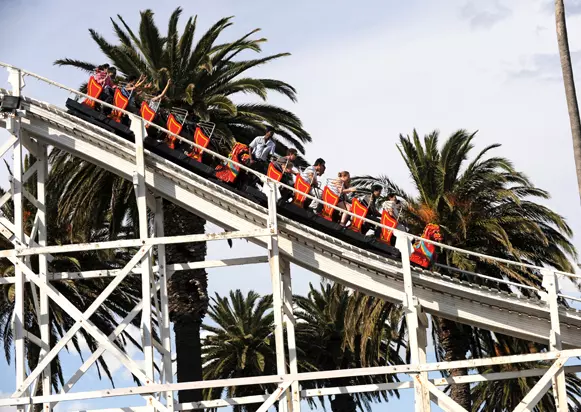
On Friday 13th December, Luna Park opens to the public in St Kilda for the first time. It is a spooky day for some, but an appropriate one for the Melbourne public embracing the weird and wonderful as they walk through the now famous Mr Moon mouth. Thousands of excited people ride the Great Scenic Railway on that first day out of 22,319 registered attendees to Luna Park. Visitors paid sixpence to enter.

1916
The Great Scenic Railway remains operational throughout World War I, even though there are reduced operations in the rest of the Park. The Park is opened for patriotic or fundraising events in the coming years and many final nights before shipping off to war were spent with Mr Moon and all his madness.

1923
On 2nd November, the ‘New Luna Park’ enjoys its grand opening at the same St Kilda location after a series of renovations, upgrades and disputes over the lease post-World War I. Key amusements and rides such as the Carousel, Noah’s Ark, the Big Dipper and the Whip make their debuts. Advertising and media coverage is like nothing Melbourne has ever seen, with the phrase – ‘Your life must not be lived in the rain, see Luna Park, you’ll smile again’ spread far and wide. Attendance skyrockets.

1937
To celebrate Luna Park’s 25th birthday, the Carousel building is turned into an over-sized birthday cake, complete with 25 huge candles on its roof. The ‘cake-structure’ will remain to house the Carousel (and thousands of pigeons) for decades to come. Five thousand balloons are released and couples celebrating their own silver wedding anniversary are invited to a special ball at Palais de Danse next door to Luna Park.

1939
In 1939-45 Luna Park remains open during World War II but has to abide by blackout restrictions. The ‘Place of 50,000 Lights’ as the Park used to be known is too clear a target for air attacks, so an eerie atmosphere descends each night, only enhancing the intrigue and magic of Mr Moon and his famous Luna Park.

1954
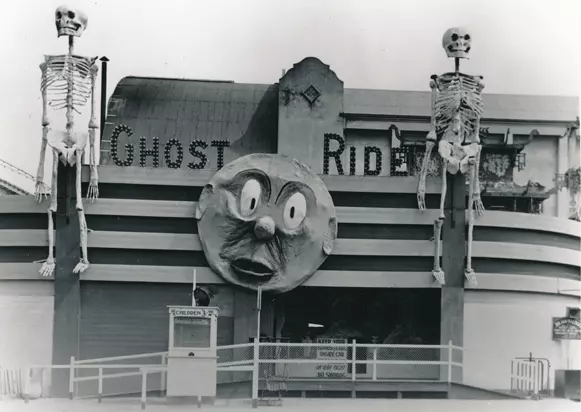
Queen Elizabeth II visits the Park as a part of her Coronation Tour. It remains unclear whether she goes upside down on any rides or screams with the rest of the visitors on the Ghost Train.

1981
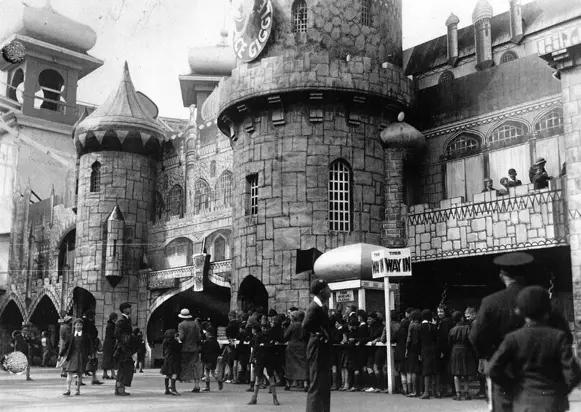
A fire lit by vandals destroys the Shoot ’Em Up Gallery, the company offices and most of the Giggle Palace. The Big Dipper and Great Scenic Railway are temporarily closed for fear of repeat incidents, but are re-opened in March 1982. The River Caves are found to be impossible to make fire-safe and are replaced by the Hurricane. The National Trust classifies the Great Scenic Railway, the Face and Towers, and the Carousel. Heritage Victoria determines a heritage overlay to the Park years later.

1987
On 13 December, for the Park’s 75th birthday, Park management runs a promotion to ‘Celebrate our 75th at our 1912 admission price of sixpence’. People are asked to dress up in 1912 costume with prizes being awarded. Weekend dance competitions are popular through the eighties and especially during the 75th celebrations.

1989
Despite heritage listing and protests from the St Kilda Council, the State Government approves an application to demolish the Big Dipper, with the owners citing that the prohibitive cost of maintenance makes the ride non commercially viable.

1994
The Ghost Train is classified by the National Trust.

1999
The new Mr Moon Face is unveiled after a major facelift.

2001
After five months of intensive renovation, the Park reopens following a major upgrade. Instead of recreating favourite and famous old rides like the River Caves or Rotor, the Park has decided to look forward, introducing new rides. At the same time, it also spends millions on the restoration and upgrade of existing classic amusements. In December, the newly-restored Carousel is opened to much acclaim.

2007
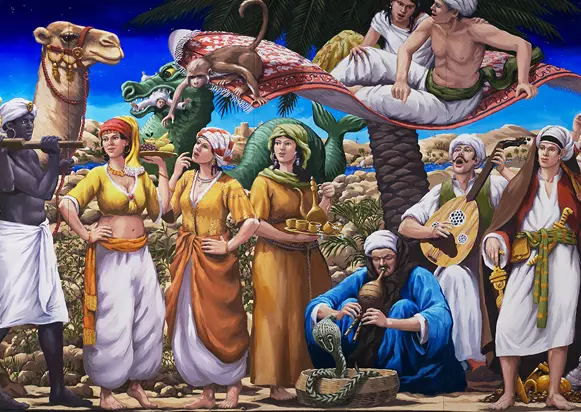
Artist Mark Ogge completes a 60 square metre painting called ‘One Thousand and One Nights’ on the Great Scenic Railway Platform and Luna Park was voted the National Trust’s Victorian Heritage Icon for 2007.

2008
Extensive restoration work on the Great Scenic Railway, commenced in 2007 and caused by the prolonged impact of the drought on soil stability, is completed.

2010
The Coney Island Top Drop replaces the smaller Shock Drop ride.
In an effort to revitalise the historic Coney Island to its once glorious past, the City of New York reopens its ‘Luna Park’.
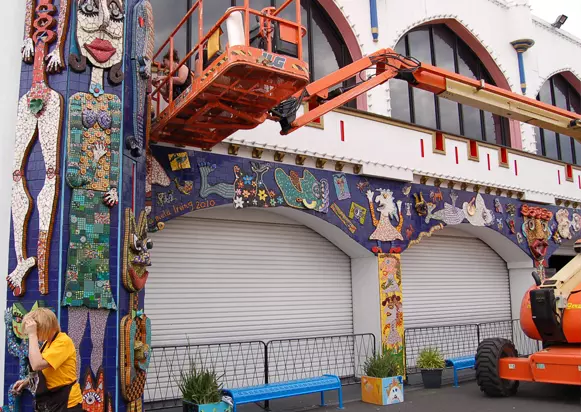
Phase one of Pamela Irving’s mosaic, ‘Dreaming with Open Eyes’ is installed on the Luna Palace façade.
2011
The Gift Shop is revived with a façade installation. Major restoration works are completed on the upper Face and Towers structure and a new ‘Luna Park’ sign is installed.
Phase two of Pamela Irving’s mosaic is installed on the Luna Palace façade.

2012
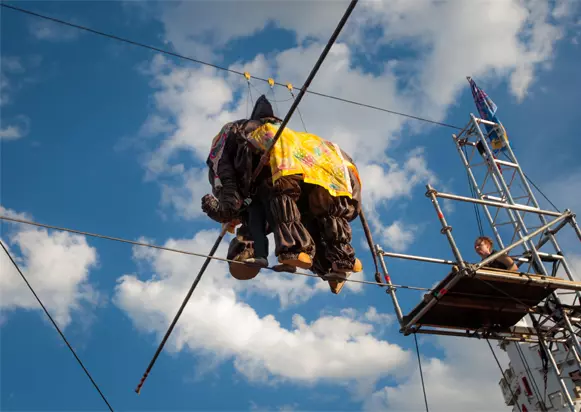
Luna Park Melbourne celebrates 100 years of fun with parties, community days and city wide celebrations. Luna Park pays tribute to its triumphant past by recreating the infamous ‘Elephant tightrope walk’ with the help of NICA tightrope walkers and amazed onlookers!
Luna Park also unveils a brand new permanent thrill ride – The Power Surge.

2015
Luna Park finished development of a new food outlet building and function space – The House of Carnivale. This was the first permanent building to be constructed in Luna Park since the Ghost Train in the 1930’s. An exciting time of change and start of a new plan for Park wide developments.

Order your own slice of Luna Park history
As a special tribute to our glorious past, you can now purchase a beautiful hard cover book detailing the colourful Park history. Read all about how Luna Park came to be Melbourne’s most recognizable icon – meet the Park creators, view the past rides and the amazing carnival acts that once appeared inside Mr Moon’s iconic mouth.
Order yours online or pop into our gift shop during Park opening hours to buy a copy in person. Limited stock available, get in quick so you don’t miss out!